Pat the salmon dry: Use paper towels to blot both sides. Dry fish browns better and won’t stick as much.
Season: Sprinkle the fillets with salt and pepper. If the fillets are thick, season the sides too.
Choose your method: Skillet for a crisp edge, or oven for hands-off cooking.
Both deliver great results.
Skillet method (quick): Heat a large nonstick or stainless skillet over medium-high. Add olive oil. Place salmon in the pan, skin-side down if using skin-on.
Cook 3–4 minutes until the underside browns and the fish releases easily. Flip and cook another 2–4 minutes, depending on thickness, until the center is just turning opaque.
Oven method (even cooking): Preheat to 400°F (200°C). Line a sheet pan with parchment.
Drizzle salmon with olive oil; season. Roast 9–12 minutes, depending on thickness, until just opaque and flakes with gentle pressure.
Make the lemon butter: In a small saucepan or the empty skillet over low heat, melt the butter. Add garlic and cook 30–60 seconds until fragrant, not browned.
Stir in lemon zest and juice. Taste and balance with a touch of honey or Dijon if it’s too sharp. Add a pinch of red pepper flakes if you like heat.
Finish with chopped herbs. Do not boil the sauce—gentle heat keeps it silky.
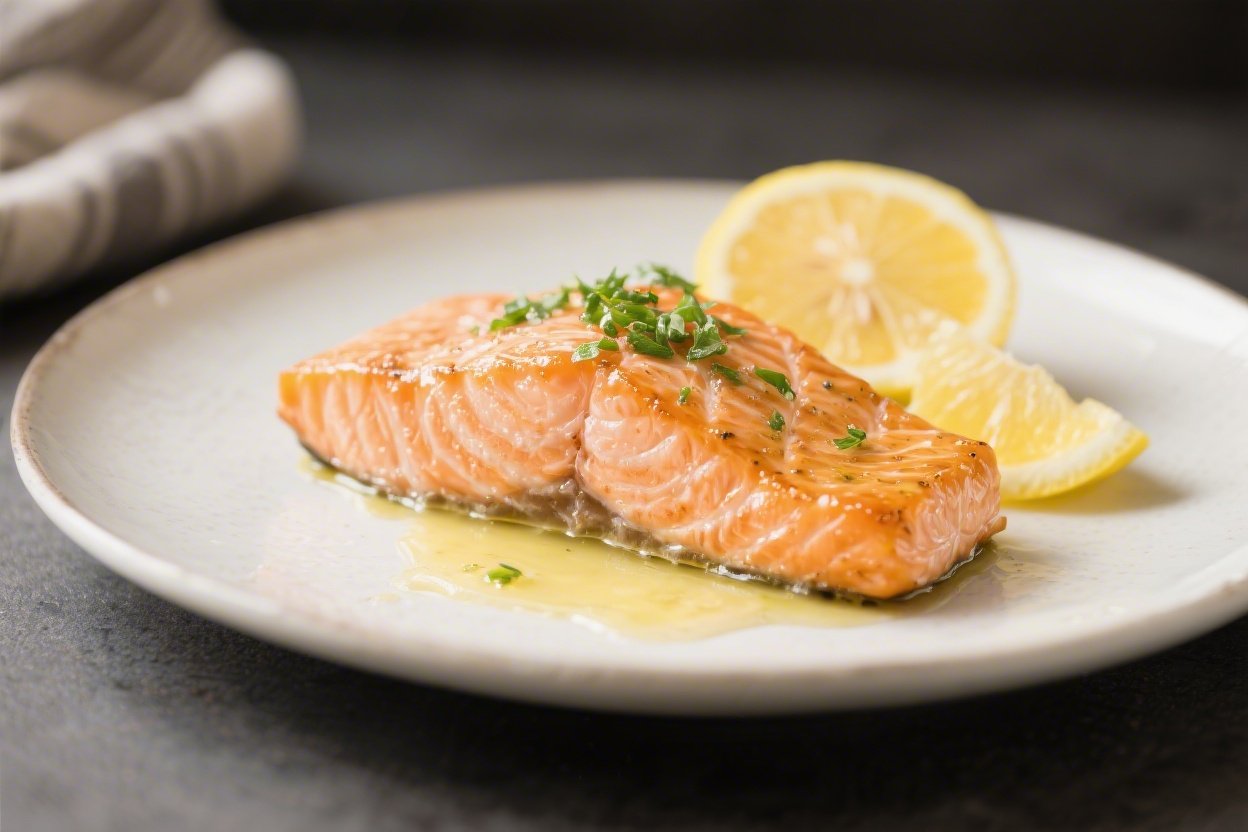
Finish the fish: Spoon warm lemon butter over the salmon. Let it rest 2 minutes so the sauce soaks in.
Serve: Add extra herbs and lemon wedges. Pair with rice, couscous, roasted potatoes, or a crisp salad.
Spoon any extra sauce over vegetables or grains.