Trim and prep the brisket. Pat the brisket dry. Trim excess hard fat, but leave a 1/4-inch fat cap to keep the meat moist.
Rub the surface with oil on all sides.
Mix the rub. Combine smoked paprika, salt, pepper, garlic powder, onion powder, chipotle, cumin, dried mustard, and oregano. Taste a pinch and adjust salt or heat as needed.
Season generously. Coat the brisket on all sides with the rub, pressing it in well. Let it rest at room temperature for 30–45 minutes while you prep your cooker.
For deeper flavor, refrigerate overnight, then bring to room temp before cooking.
Choose your cooking method. Smoker: Preheat to 225–250°F. Use hardwood like oak, hickory, or pecan.
Oven: Preheat to 275°F. Add 1 teaspoon liquid smoke to the broth for a smoky note.
Slow cooker: Low for 8–10 hours, then finish in the oven for bark.
Set up moisture. In a small bowl, mix beef broth and apple cider vinegar.
If smoking, use it to spritz every 60–90 minutes. If baking, pour into the roasting pan under a rack so steam keeps the brisket moist.
Cook low and slow. Place brisket fat-side up. Cook until the internal temp reaches ~165°F and the bark is set.
This usually takes 3–5 hours depending on thickness.
Wrap for tenderness. Wrap the brisket in butcher paper or foil with a splash of the broth mixture. Return it to the heat and continue cooking until it reaches 200–203°F and a probe slides in like butter.
Rest properly. Remove from heat and let the wrapped brisket rest at least 45–60 minutes. Resting lets the juices redistribute and keeps the slices moist.
Make the glaze. While it rests, simmer sugar-free ketchup, vinegar, Worcestershire, mustard, sweetener, smoked paprika, salt, and pepper for 5–7 minutes until slightly thick.
Adjust sweetener and tang to taste.
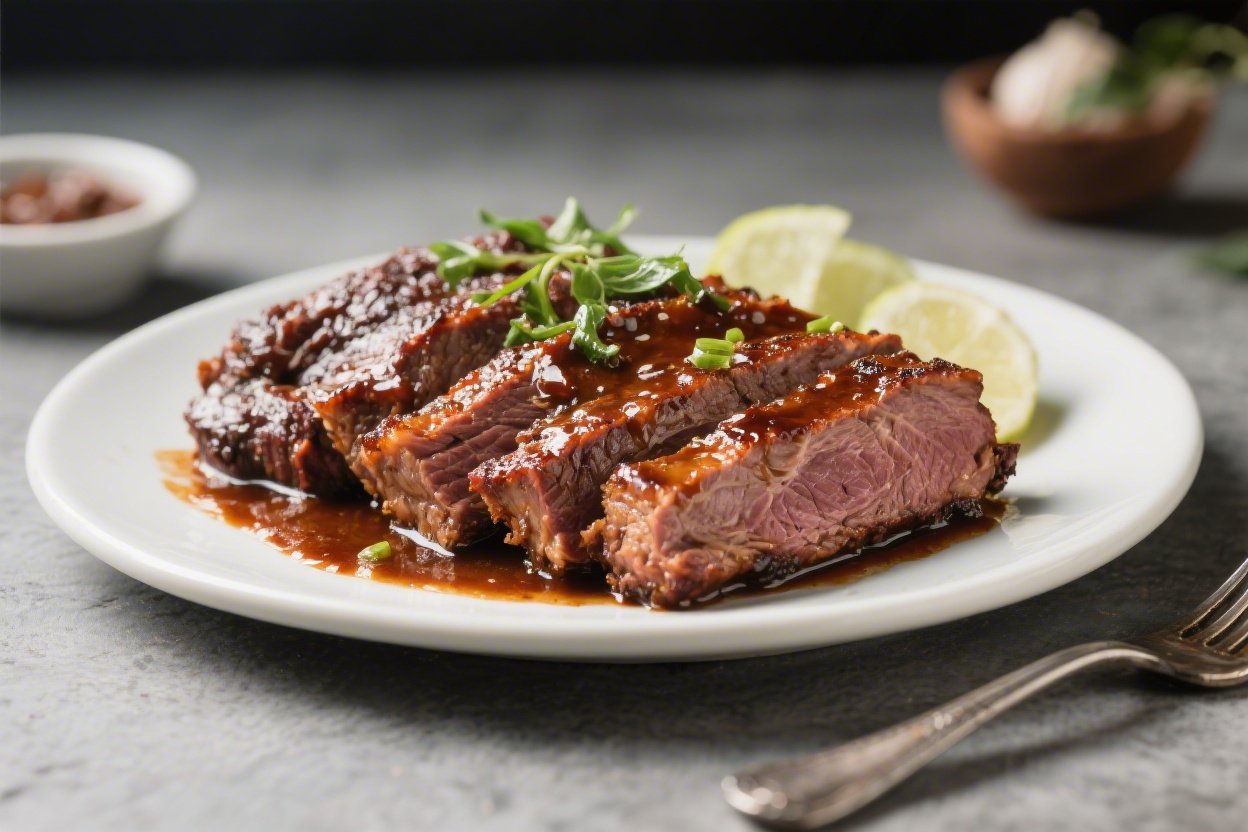
Finish and slice. Unwrap the brisket. Brush lightly with the low-carb glaze and, if you like, dot with butter. For extra bark, put it under the broiler or back on the smoker for 5–10 minutes to set the glaze.
Slice against the grain into 1/4-inch slices.