Easy Keto Chicken Stir Fry – Quick, Flavorful, and Low-Carb
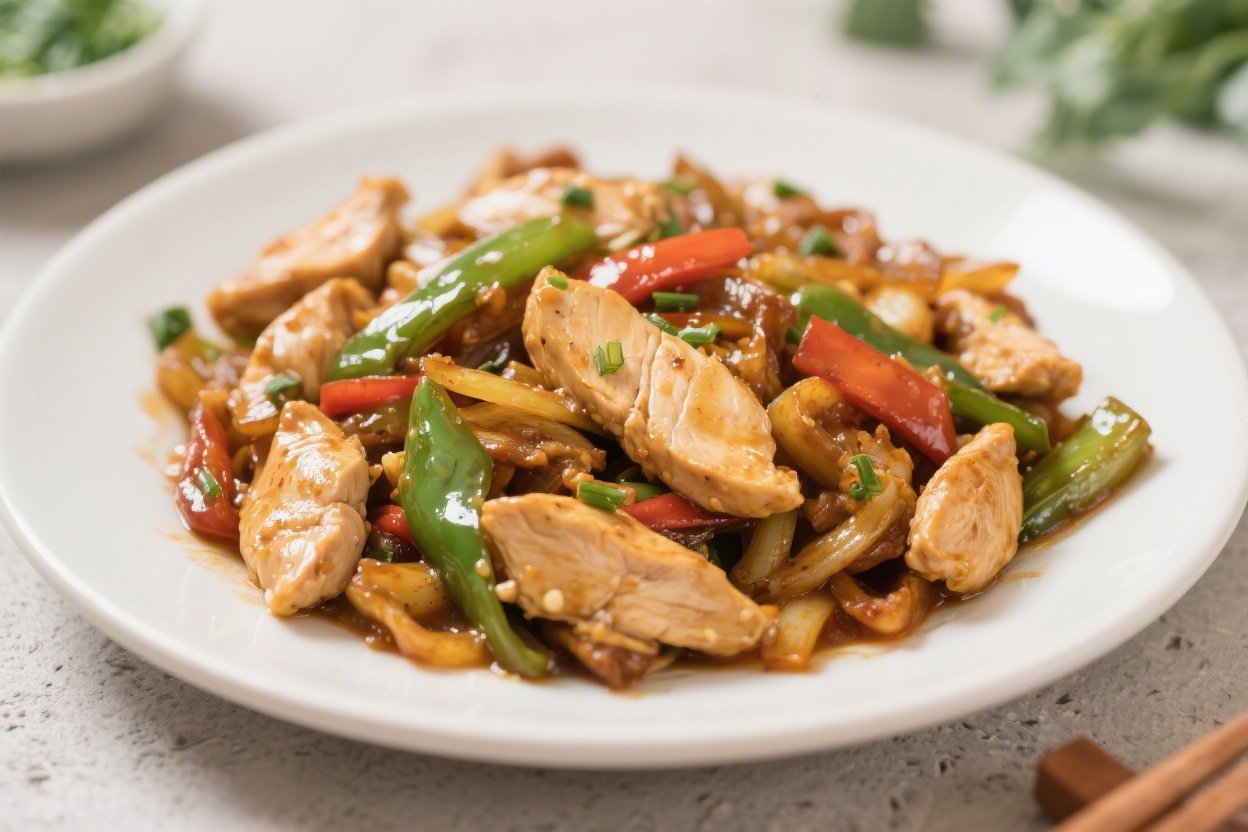
This Easy Keto Chicken Stir Fry is the kind of recipe you keep on repeat. It’s fast, flexible, and full of bright, savory flavor without the carbs that usually tag along with takeout. You’ll get juicy chicken, crisp-tender veggies, and a glossy sauce that tastes like your favorite stir fry—but made at home in under 30 minutes.
If you’re new to keto or simply eating fewer carbs, this is a simple way to stay on track without feeling restricted. No fuss, no weird ingredients—just clean, tasty food that everyone at the table will enjoy.
Ingredients
Method
- Prep everything first. Thinly slice the chicken and vegetables so they cook fast and evenly. Mince garlic and ginger. Stir fry moves quickly, so having everything ready makes a big difference.
- Make the sauce. In a small bowl, whisk tamari or coconut aminos, rice vinegar, sesame oil, keto sweetener, and red pepper flakes if using. Taste and adjust salt or sweetness. If you plan to thicken, sprinkle in xanthan gum and whisk well to avoid clumps.
- Heat the pan properly. Use a large wok or a wide skillet. Add 1 tablespoon oil and heat over medium-high until shimmering. A hot pan gives you good sear and prevents sogginess.
- Cook the chicken in batches. Season sliced chicken lightly with salt and pepper. Add half to the pan, spread it out, and let it sear for 2–3 minutes before stirring. Cook until just cooked through, 4–5 minutes total. Transfer to a plate and repeat with remaining chicken, adding a little more oil if needed.
- Stir fry the vegetables. Add another tablespoon of oil. Toss in onions and mushrooms first; cook 2 minutes. Add broccoli and bell pepper; cook 2–3 minutes more. Add zucchini and cabbage last since they soften quickly; cook 1–2 minutes. Vegetables should be crisp-tender.
- Add aromatics. Push vegetables to the sides. Add a small splash of oil if the pan looks dry. Stir in garlic and ginger; cook 30 seconds until fragrant.
- Bring it together. Return chicken and any juices to the pan. Pour in the sauce. Toss everything to coat. Let it bubble for 1–2 minutes so flavors meld and the sauce slightly thickens.
- Finish and serve. Turn off heat. Sprinkle in green onions and sesame seeds. Taste and adjust with a splash of tamari, vinegar, or a pinch of sweetener if needed. Serve over warm cauliflower rice or zucchini noodles.

What Makes This Special
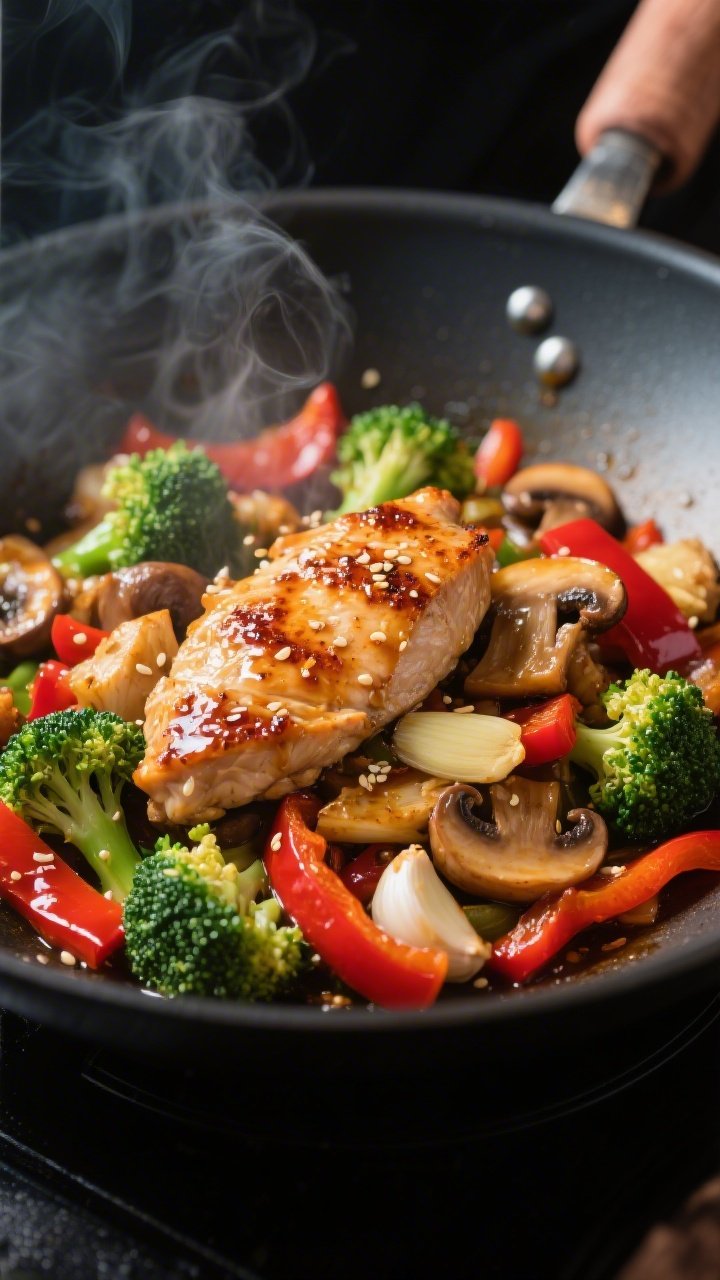
This stir fry brings restaurant-style flavor with a short ingredient list and minimal prep. The sauce is naturally low carb, and you won’t miss sugar thanks to a smart blend of umami-rich ingredients.
It’s also easy to customize with whatever low-carb vegetables you have on hand, so nothing goes to waste. Best of all, it cooks quickly at high heat, so you get crisp edges on the chicken and vibrant, crunchy vegetables without turning soggy.
Shopping List
- Chicken: 1.5 pounds boneless, skinless chicken thighs (or breasts), thinly sliced
- Healthy fats: 2–3 tablespoons avocado oil or light olive oil
- Low-carb vegetables: 2 cups broccoli florets, 1 red bell pepper (sliced), 1 small zucchini (halved and sliced), 1 cup sliced mushrooms, 1/2 small yellow onion (sliced), 2 cups shredded green cabbage (optional but great for bulk)
- Aromatics: 3 cloves garlic (minced), 1 tablespoon fresh ginger (minced or grated), 2 green onions (sliced)
- Sauce base: 1/3 cup tamari or coconut aminos, 1 tablespoon rice vinegar, 1 teaspoon sesame oil
- Thickener (keto-friendly): 1/2 teaspoon xanthan gum (optional), or reduce sauce longer
- Sweetness (optional but helpful): 1–2 teaspoons granular or liquid keto sweetener (like erythritol, allulose, or stevia blend)
- Heat (optional): 1/2–1 teaspoon red pepper flakes or a drizzle of sriracha-style hot sauce (sugar-free)
- Garnishes: Sesame seeds and extra green onions
- For serving (optional): Cauliflower rice or zucchini noodles
- Seasoning basics: Salt and black pepper
Step-by-Step Instructions
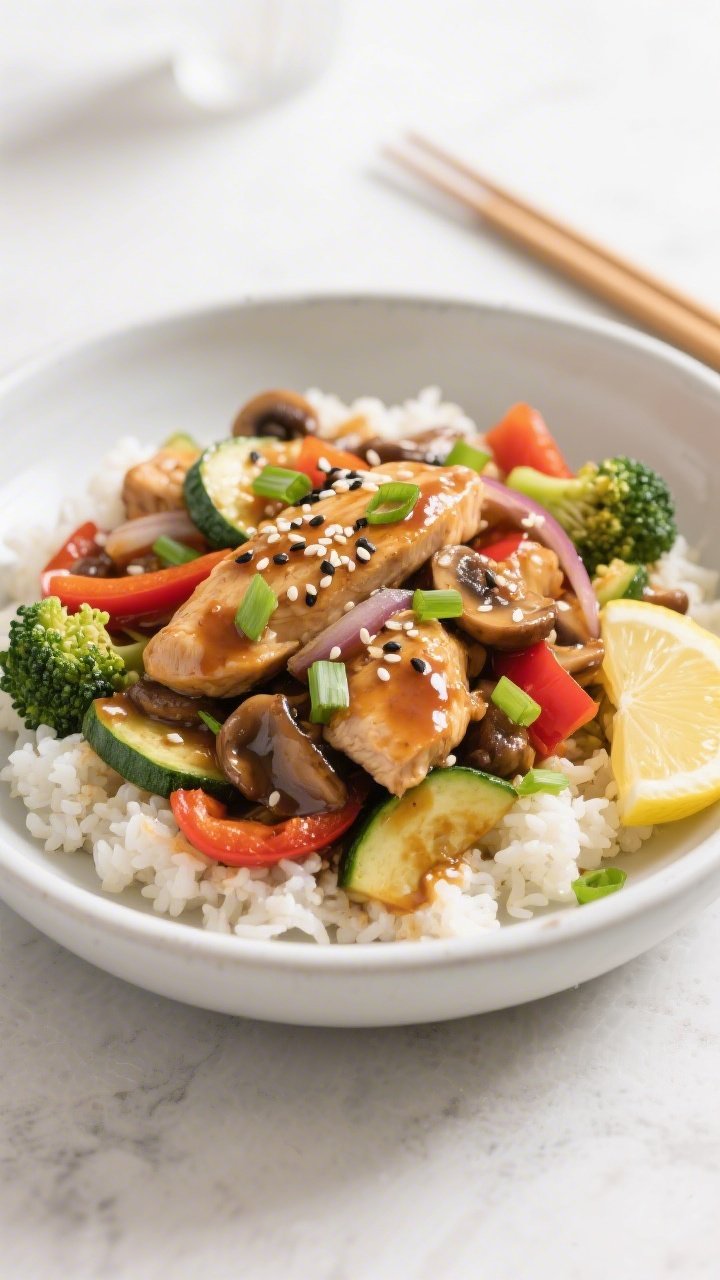
- Prep everything first. Thinly slice the chicken and vegetables so they cook fast and evenly. Mince garlic and ginger.
Stir fry moves quickly, so having everything ready makes a big difference.
- Make the sauce. In a small bowl, whisk tamari or coconut aminos, rice vinegar, sesame oil, keto sweetener, and red pepper flakes if using. Taste and adjust salt or sweetness. If you plan to thicken, sprinkle in xanthan gum and whisk well to avoid clumps.
- Heat the pan properly. Use a large wok or a wide skillet.
Add 1 tablespoon oil and heat over medium-high until shimmering. A hot pan gives you good sear and prevents sogginess.
- Cook the chicken in batches. Season sliced chicken lightly with salt and pepper. Add half to the pan, spread it out, and let it sear for 2–3 minutes before stirring.
Cook until just cooked through, 4–5 minutes total. Transfer to a plate and repeat with remaining chicken, adding a little more oil if needed.
- Stir fry the vegetables. Add another tablespoon of oil. Toss in onions and mushrooms first; cook 2 minutes.
Add broccoli and bell pepper; cook 2–3 minutes more. Add zucchini and cabbage last since they soften quickly; cook 1–2 minutes. Vegetables should be crisp-tender.
- Add aromatics. Push vegetables to the sides.
Add a small splash of oil if the pan looks dry. Stir in garlic and ginger; cook 30 seconds until fragrant.
- Bring it together. Return chicken and any juices to the pan. Pour in the sauce.
Toss everything to coat. Let it bubble for 1–2 minutes so flavors meld and the sauce slightly thickens.
- Finish and serve. Turn off heat. Sprinkle in green onions and sesame seeds.
Taste and adjust with a splash of tamari, vinegar, or a pinch of sweetener if needed. Serve over warm cauliflower rice or zucchini noodles.
Storage Instructions
- Fridge: Store in an airtight container for up to 4 days. Keep cauliflower rice separate to avoid moisture buildup.
- Reheat: Warm in a skillet over medium heat with a splash of water or tamari until hot.
Microwave in short bursts, stirring between, to prevent overcooking.
- Freezer: The chicken freezes well; some veggies can soften after thawing. Freeze up to 2 months in meal-prep portions. Thaw overnight in the fridge before reheating.
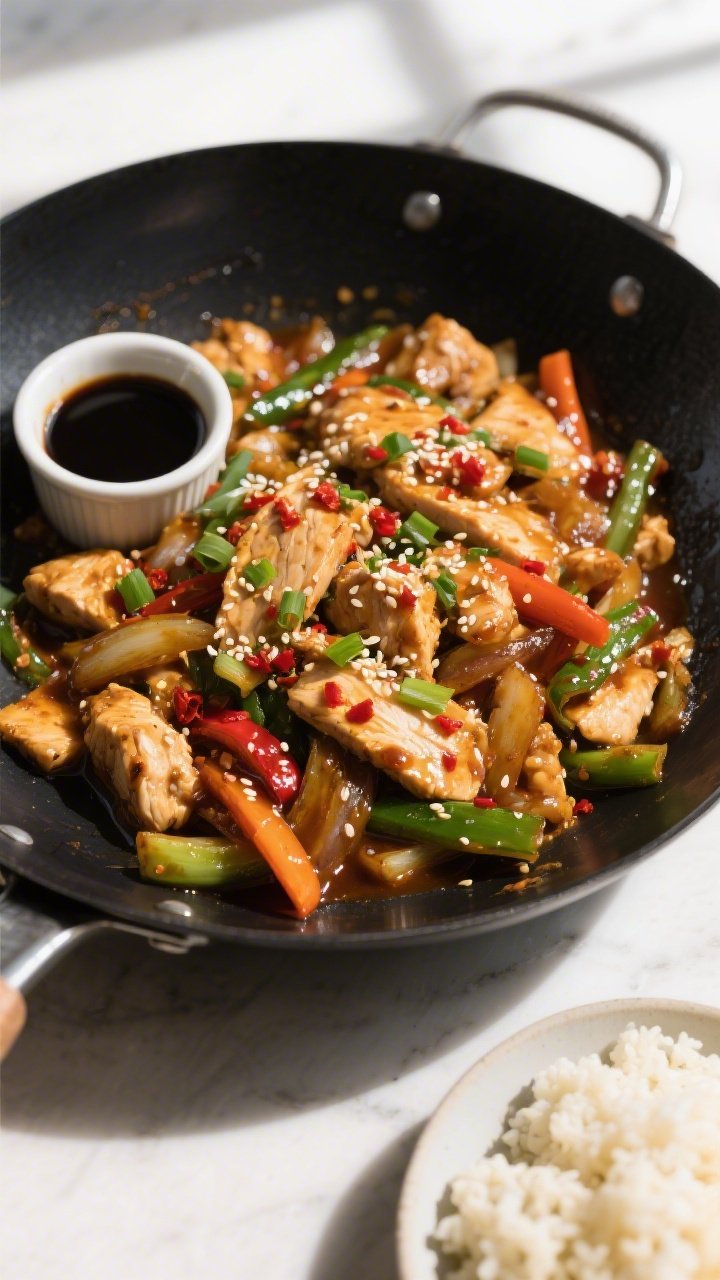
Benefits of This Recipe
- Keto-friendly: Low in carbs, high in protein, and easy to pair with non-starchy vegetables.
- Fast and flexible: Ready in about 25–30 minutes, and you can swap vegetables based on what you have.
- Meal-prep friendly: Stores well and tastes great the next day, making weekday lunches simple.
- Budget-conscious: Uses common pantry staples and everyday produce—no specialty items required.
- Big flavor, clean ingredients: Umami-packed sauce without added sugars or heavy starches.
Common Mistakes to Avoid
- Overcrowding the pan: This traps steam and makes everything soggy.
Cook chicken in batches and keep heat high.
- Skipping the prep: Stir fry goes quickly. If you’re still chopping while cooking, the vegetables can overcook.
- Adding garlic too early: It burns fast. Add it after the vegetables have started to soften.
- Too much sweetener: A little balances flavors, but too much can make the sauce taste off.
Start small and adjust.
- Use of sugary sauces: Regular teriyaki or sweet chili sauce can spike carbs. Stick to tamari or coconut aminos.
Variations You Can Try
- Spicy sesame chicken: Add chili-garlic paste and extra sesame oil. Top with toasted sesame seeds.
- Lemon-ginger twist: Stir in fresh lemon zest and a squeeze of juice at the end for a bright finish.
- Peanut-free “peanut” style: Whisk 1–2 tablespoons unsweetened almond butter into the sauce for creaminess.
- Beef or shrimp swap: Use thinly sliced flank steak or peeled shrimp.
Adjust cook times—shrimp cooks in 2–3 minutes.
- Extra low-carb greens: Add chopped bok choy, Napa cabbage, or spinach near the end to wilt gently.
FAQ
Is this stir fry truly keto?
Yes. It uses low-carb vegetables and a sauce without sugar or cornstarch. If you include a sweetener, choose a keto-friendly option and keep the amount small.
Serve over cauliflower rice instead of regular rice to keep carbs low.
What can I use instead of xanthan gum?
You can skip it and let the sauce reduce a minute longer for a naturally thicker texture. Another option is a small amount of glucomannan (konjac) powder. Add sparingly to avoid a gummy feel.
Can I make it ahead?
Absolutely.
Cook as directed, cool completely, and store in the fridge for up to 4 days. Reheat gently to keep the chicken tender and the vegetables crisp-tender. For best texture, cook zucchini and cabbage slightly under if you plan to reheat later.
Which vegetables should I avoid on keto?
Skip starchy vegetables like carrots in large amounts, peas, corn, and regular potatoes.
Stick with low-carb picks like broccoli, bell peppers, zucchini, mushrooms, cabbage, spinach, and bok choy.
How do I keep the chicken tender?
Slice it thinly against the grain, cook over high heat, and avoid overcooking. You can also “velvet” the chicken by tossing it with 1 teaspoon baking soda for 15 minutes, then rinsing and patting dry before cooking. This step is optional but keeps it very tender.
Can I use frozen vegetables?
Yes, but thaw and pat them dry first, or add them in small amounts so the pan stays hot.
Excess moisture can make the stir fry steam instead of sear.
What’s the best oil for high heat?
Avocado oil works well because it has a high smoke point and a neutral flavor. Light olive oil can work too. Save extra-virgin olive oil for finishing, not stir frying.
How can I add more fat for keto macros?
Drizzle extra sesame oil at the end, add sliced avocado on the side, or stir in a spoon of almond butter to the sauce.
You can also top with chopped nuts like peanuts or almonds if that fits your plan.
Is coconut aminos better than tamari?
Both are good. Coconut aminos are typically a little sweeter and lower in sodium, while tamari is saltier and more savory. Choose based on your taste and sodium needs.
What can I serve with it besides cauliflower rice?
Zucchini noodles, shirataki noodles, sautéed cabbage “noodles,” or a simple side salad with a light vinaigrette all pair well and keep carbs down.
Final Thoughts
Easy Keto Chicken Stir Fry is one of those weeknight heroes you can count on.
It’s quick, flexible, and gives you the takeout feel without the carb hangover. Keep the basic method the same—hot pan, quick sear, crisp veggies, and a clean, balanced sauce—and you’ll have a reliable, tasty meal anytime. Make it your own with the vegetables and heat level you like, and enjoy a dinner that’s both satisfying and smart.
Printable Recipe Card
Want just the essential recipe details without scrolling through the article? Get our printable recipe card with just the ingredients and instructions.