Garlic Butter Salmon With Asparagus – Simple, Flavorful, and Fast
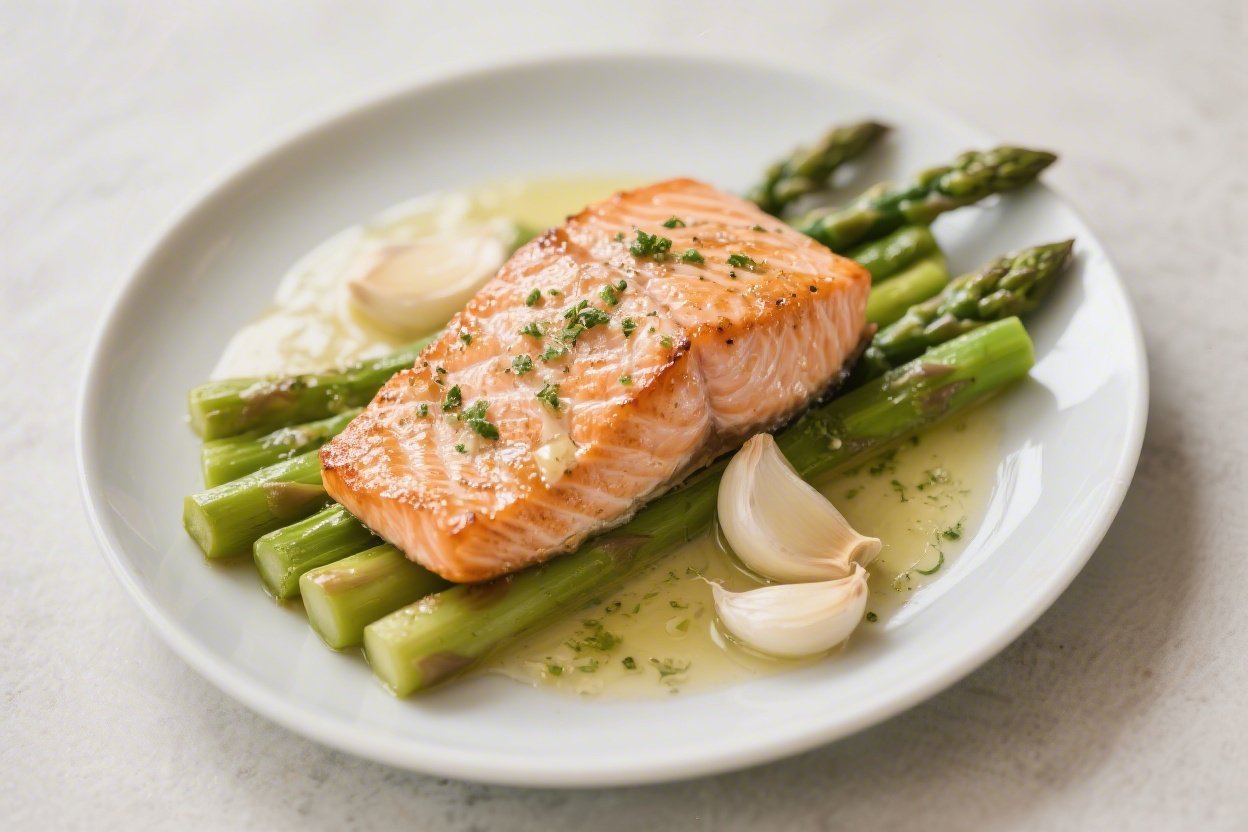
Garlic butter salmon with asparagus is the kind of dinner you make once and keep coming back to. It’s fast, full of flavor, and feels special without much effort. The buttery sauce blends with lemon and garlic to coat the salmon and crisp-tender asparagus, making every bite bright and satisfying.
Whether you’re cooking for a weeknight or an easy dinner with friends, this one-pan meal delivers big on taste. Clean-up is a breeze, and the results are consistently great.
Ingredients
Method
- Preheat the oven: Set to 400°F (200°C). Line a large sheet pan with parchment or lightly oil it for easy cleanup.
- Prep the asparagus: Snap or trim the woody ends. Toss the spears with 1 tablespoon olive oil, a generous pinch of salt, and pepper. Spread them on the pan in a single layer, leaving space for the salmon.
- Make the garlic butter: In a small bowl, combine melted butter, minced garlic, the zest of 1 lemon, and 1 tablespoon lemon juice. Stir in a pinch of salt, pepper, and a pinch of red pepper flakes if using.
- Season the salmon: Pat fillets dry with paper towels. Drizzle lightly with olive oil and season both sides with salt and pepper. Add a light dusting of smoked paprika if you like.
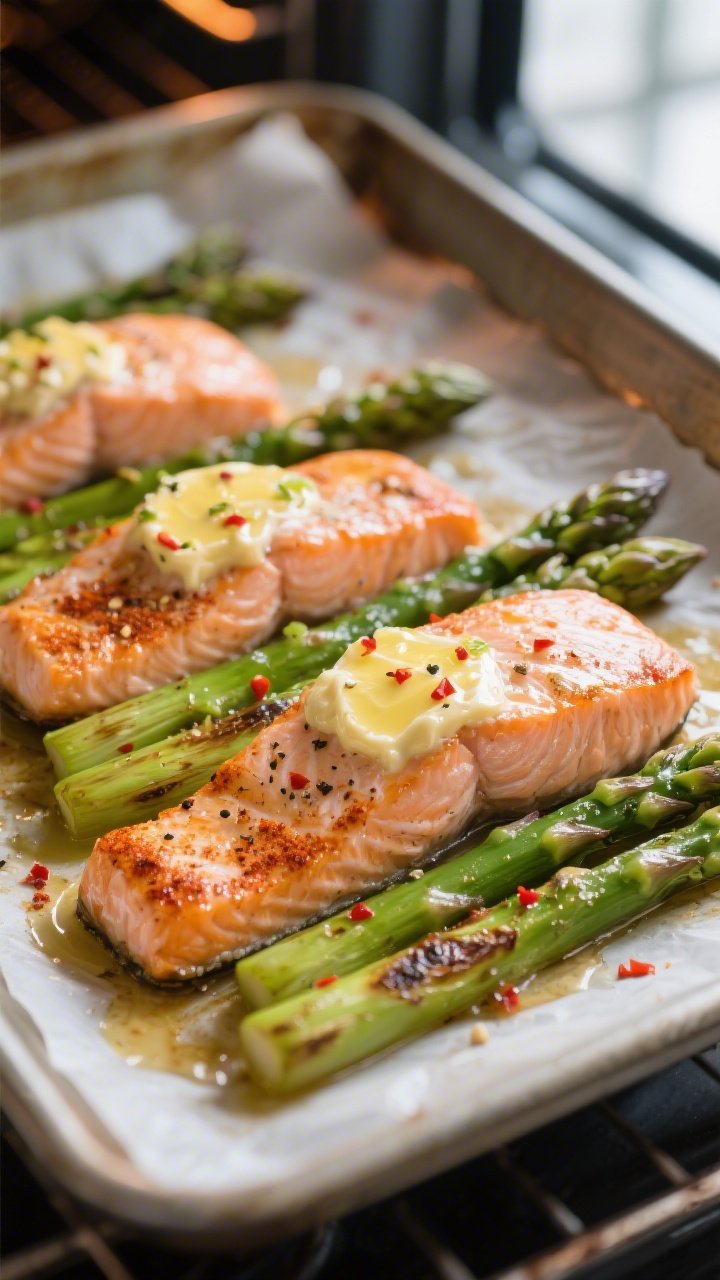
- Arrange on the pan: Nestle the salmon fillets between the asparagus. Spoon most of the garlic butter over the salmon, then drizzle the rest over the asparagus.
- Roast: Bake for 10–12 minutes, depending on thickness. Salmon is done when it flakes easily and reaches an internal temperature of 125–130°F (52–54°C) for medium. Thicker fillets may need 1–2 more minutes.
- Optional broil: For extra color, switch to broil for 1–2 minutes at the end. Watch closely to avoid burning the garlic.
- Finish and serve: Squeeze more lemon over everything. Scatter chopped parsley or dill on top. Serve with lemon wedges and any juices from the pan.
What Makes This Recipe So Good
- Quick and easy: Everything cooks on one pan in under 25 minutes, start to finish.
- Balanced flavors: Rich butter, zesty lemon, and savory garlic bring out the best in salmon.
- Nutrient-packed: You get protein, healthy fats, fiber, and vitamins in one simple meal.
- Minimal cleanup: One pan means less time at the sink and more time enjoying dinner.
- Foolproof method: Roasting keeps the fish moist while giving the asparagus a light char.
Shopping List
- Salmon fillets (4 fillets, about 6 ounces each), skin-on or skinless
- Fresh asparagus (1 to 1.5 pounds), trimmed
- Unsalted butter (4 tablespoons), melted
- Olive oil (1 to 2 tablespoons)
- Fresh garlic (3 to 4 cloves), minced
- Lemon (1 to 2), for zest and juice, plus wedges for serving
- Fresh parsley or dill (a small handful), chopped
- Salt (kosher or sea salt)
- Black pepper, freshly ground
- Red pepper flakes (optional, for a hint of heat)
- Smoked paprika (optional, for color and warmth)
Instructions
- Preheat the oven: Set to 400°F (200°C). Line a large sheet pan with parchment or lightly oil it for easy cleanup.
- Prep the asparagus: Snap or trim the woody ends.
Toss the spears with 1 tablespoon olive oil, a generous pinch of salt, and pepper. Spread them on the pan in a single layer, leaving space for the salmon.
- Make the garlic butter: In a small bowl, combine melted butter, minced garlic, the zest of 1 lemon, and 1 tablespoon lemon juice. Stir in a pinch of salt, pepper, and a pinch of red pepper flakes if using.
- Season the salmon: Pat fillets dry with paper towels.
Drizzle lightly with olive oil and season both sides with salt and pepper. Add a light dusting of smoked paprika if you like.
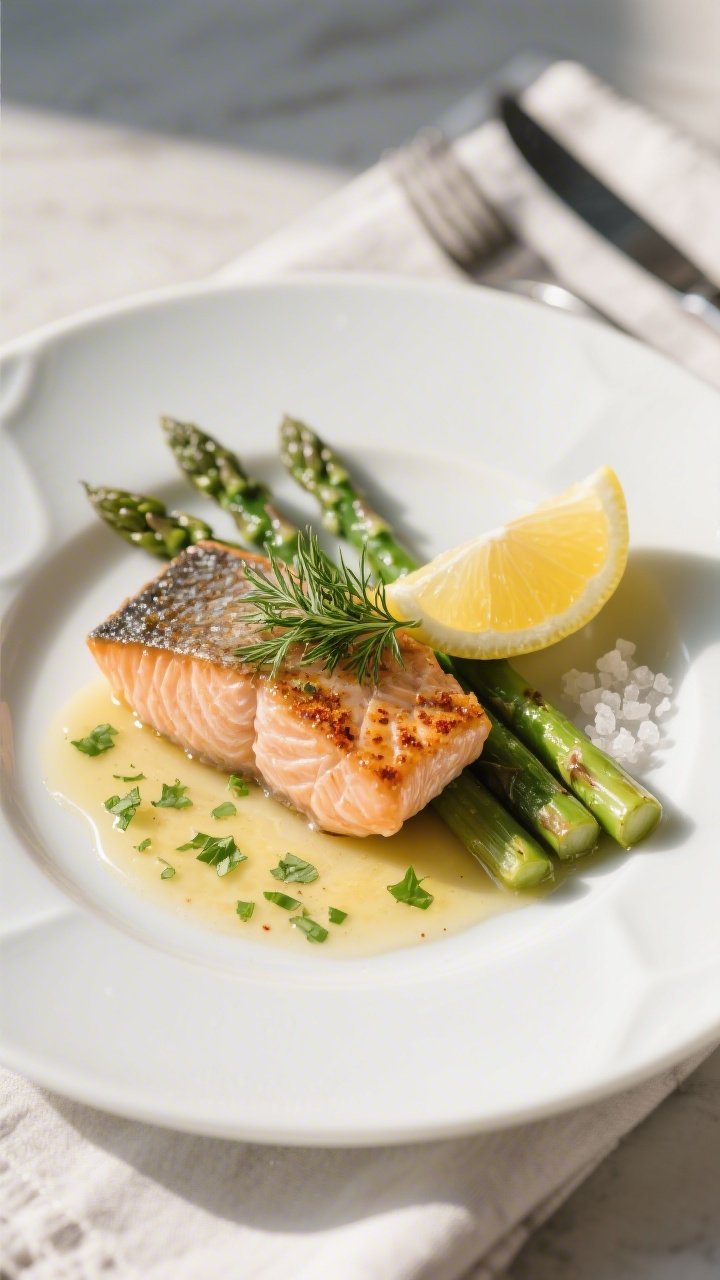
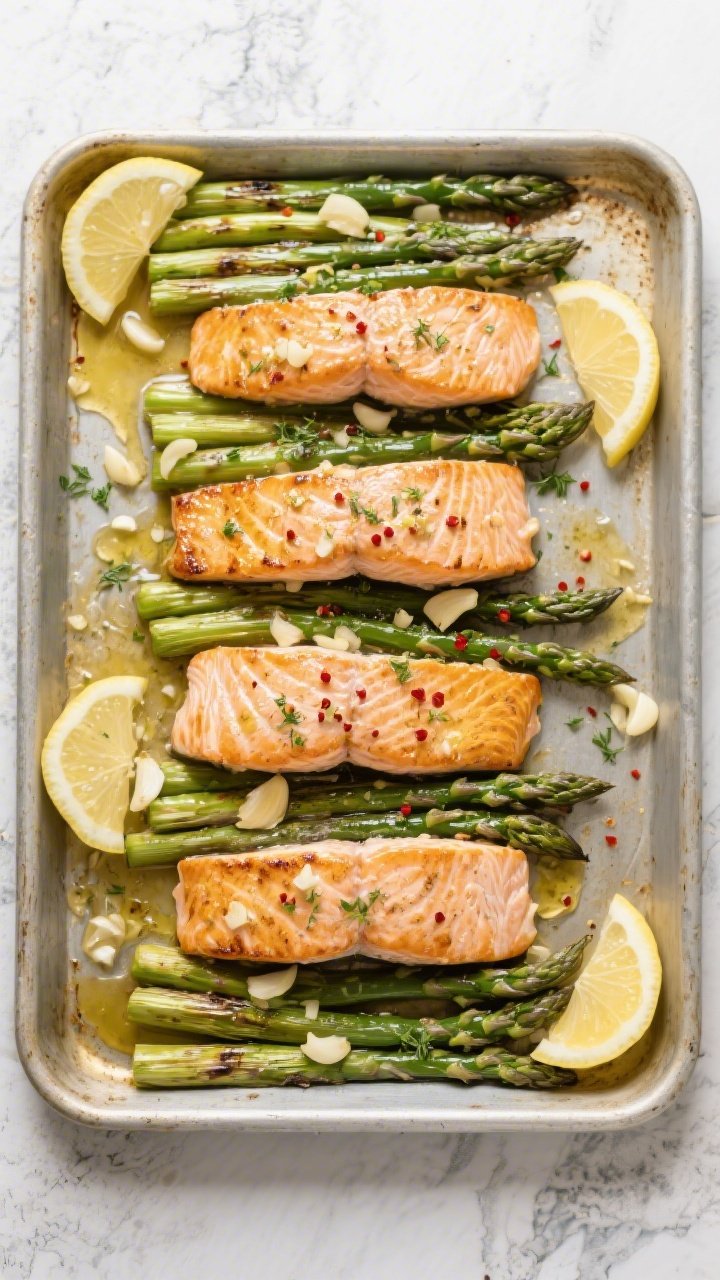
- Arrange on the pan: Nestle the salmon fillets between the asparagus. Spoon most of the garlic butter over the salmon, then drizzle the rest over the asparagus.
- Roast: Bake for 10–12 minutes, depending on thickness.
Salmon is done when it flakes easily and reaches an internal temperature of 125–130°F (52–54°C) for medium. Thicker fillets may need 1–2 more minutes.
- Optional broil: For extra color, switch to broil for 1–2 minutes at the end. Watch closely to avoid burning the garlic.
- Finish and serve: Squeeze more lemon over everything.
Scatter chopped parsley or dill on top. Serve with lemon wedges and any juices from the pan.
Loved This Recipe?
If you're looking for more simple, healthy keto dinners, grab my FREE 7-Day Easy Keto Dinner Reset. You'll get 7 easy keto dinner recipes, simple grocery lists, and a done-for-you plan that takes the stress out of mealtime.
How to Store
- Refrigerate: Store leftovers in an airtight container for up to 2 days. Keep salmon and asparagus together for convenience.
- Reheat gently: Warm in a 275°F (135°C) oven for 8–10 minutes, or microwave at 50% power in short bursts.
Avoid high heat to prevent drying.
- Serve cold: Flake leftover salmon over salads or grain bowls. It’s delicious chilled with a squeeze of lemon.
- Freezing: Not ideal for asparagus. You can freeze cooked salmon for up to 2 months, tightly wrapped, but texture will be softer after thawing.
Why This is Good for You
- Omega-3 fats: Salmon provides EPA and DHA, which support heart, brain, and joint health.
- High-quality protein: Keeps you full and supports muscle recovery.
- Vitamins and minerals: Asparagus adds fiber, folate, and vitamins A, C, and K.
Lemon boosts flavor without extra calories.
- Better-for-you cooking method: Roasting uses minimal oil and locks in moisture and nutrients.
Common Mistakes to Avoid
- Overcooking the salmon: Dry salmon is the main issue. Start checking at 8–9 minutes if your fillets are thin. Use a thermometer for best results.
- Skipping the pat-dry step: Moisture on the fish prevents browning and dilutes the seasoning.
- Crowding the pan: Give the asparagus and salmon space so they roast instead of steam.
- Adding garlic too early on high heat: In a skillet, garlic can burn fast.
In the oven, it’s safer, but broil carefully.
- Using thick, woody asparagus: Trim generously. Tough ends never soften, even with longer roasting.
Variations You Can Try
- Herb butter twist: Mix in chopped chives, tarragon, or basil with the garlic butter.
- Honey lemon glaze: Add 1–2 teaspoons honey to the butter mixture for a gentle sweetness that caramelizes slightly.
- Parmesan finish: Sprinkle grated Parmesan over the asparagus in the last 3 minutes of roasting.
- Sheet pan swaps: Use broccolini, green beans, or thin carrot sticks if asparagus isn’t available. Adjust timing as needed.
- Spice it up: Add a pinch of cayenne or use a lemon-pepper blend instead of plain pepper.
- Skillet method: Sear salmon skin-side down in a hot skillet with oil, 3–4 minutes, flip, add garlic butter, and finish in a 375°F (190°C) oven for 5–7 minutes.
Roast asparagus separately.
FAQ
Should I leave the skin on the salmon?
Skin-on works well because it protects the flesh and helps keep the fillet moist. After cooking, the skin will peel off easily if you prefer not to eat it.
How do I know when asparagus is done?
Asparagus should be bright green and tender with a little snap. Thin spears cook faster than thick ones, so start checking around the 8-minute mark.
What if I only have frozen salmon?
Thaw it in the fridge overnight, then pat dry very well before cooking.
If cooking from frozen, add a few extra minutes and expect a bit more moisture on the pan.
Can I use ghee or oil instead of butter?
Yes. Ghee gives a buttery flavor with a higher smoke point. Olive oil works too, but you’ll miss a bit of the rich, classic butter taste.
Consider adding a squeeze of extra lemon for balance.
What can I serve with this?
Great sides include roasted baby potatoes, couscous, rice, or a simple green salad. A dollop of Greek yogurt mixed with lemon and dill also pairs nicely.
How can I prevent a fishy smell?
Use fresh salmon, cook it the day you buy it, and avoid overcooking. A quick squeeze of lemon after roasting brightens the aroma and taste.
Is farmed or wild salmon better for this recipe?
Both work.
Wild salmon is leaner and cooks a bit faster; farmed is richer and more forgiving. Adjust timing slightly based on thickness and fat content.
In Conclusion
Garlic butter salmon with asparagus is a go-to meal that checks every box: fast, flavorful, and wholesome. The simple method and short ingredient list make it weeknight-friendly, while the bright lemon and fresh herbs keep it exciting.
With a few easy tips and variations, you can customize it to match your taste or what you have on hand. Keep this recipe in your back pocket, and dinner will feel effortless, any night of the week.
Printable Recipe Card
Want just the essential recipe details without scrolling through the article? Get our printable recipe card with just the ingredients and instructions.