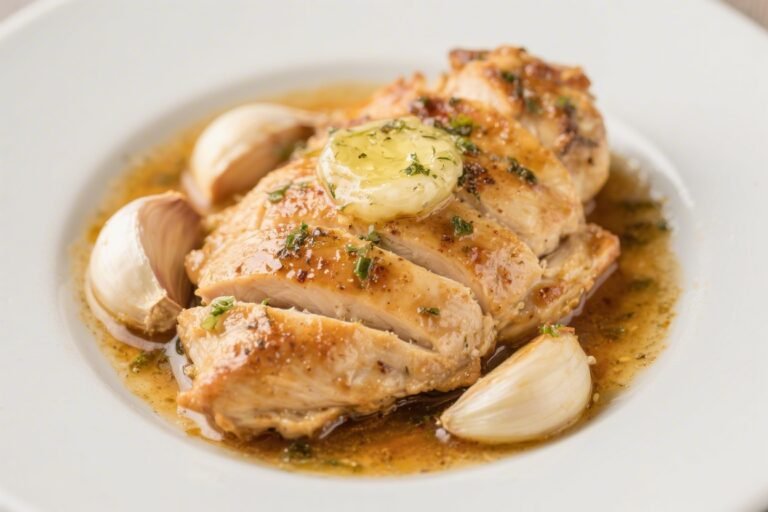
One-Pan Lemon Garlic Salmon & Asparagus – Bright, Easy, and Weeknight-Friendly
This is the kind of dinner that makes you feel like you’ve got it all together. A single pan, a handful of fresh ingredients, and a flavor that tastes like you fussed for hours. The salmon comes out tender with crispy edges, and the asparagus turns sweet and just a little charred.
Lemon, garlic, and a touch of butter do most of the heavy lifting. Cleanup is quick, and the results are bright, satisfying, and perfect any night of the week.
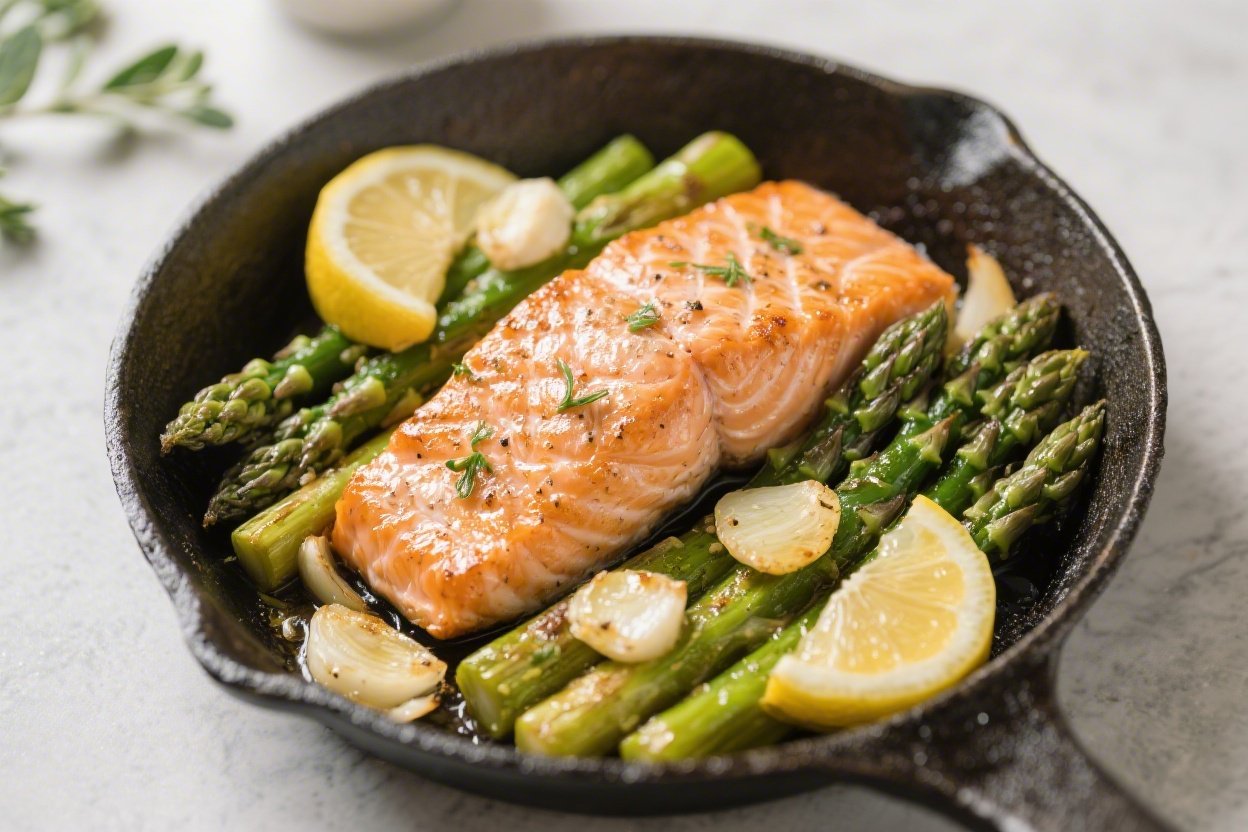
One-Pan Lemon Garlic Salmon & Asparagus - Bright, Easy, and Weeknight-Friendly
Ingredients
Method
- Preheat the oven: Set to 425°F (220°C). Line a large sheet pan with parchment paper or lightly oil it for easier cleanup.
- Prep the asparagus: Trim woody ends by snapping or cutting the bottom inch. Pat dry to help them roast instead of steam.
- Toss the asparagus: On the sheet pan, toss asparagus with 1 tablespoon olive oil, 1/2 teaspoon salt, and a pinch of pepper. Spread into a single layer along the edges, leaving room in the center for the salmon.
- Mix the sauce: In a small bowl, combine melted butter, remaining 1 tablespoon olive oil, minced garlic, lemon zest, 2 tablespoons lemon juice, Dijon, and honey. Add red pepper flakes if using. Whisk until smooth.
- Season the salmon: Pat fillets dry. Place them skin-side down (if using skin-on) in the center of the pan. Sprinkle with the remaining 1/2 teaspoon salt and the rest of the pepper.
- Brush and drizzle: Spoon about half of the lemon garlic mixture over the salmon. Drizzle a little over the asparagus as well. Reserve the rest for finishing.
- Roast: Bake for 10–12 minutes for thinner fillets, or 12–14 minutes for thicker ones. The asparagus should be crisp-tender and lightly charred on the tips, and the salmon should flake easily with a fork.
- Optional broil: For extra color, switch to broil for 1–2 minutes at the end. Keep a close eye to avoid overcooking.
- Finish and garnish: Spoon the remaining sauce over the salmon. Sprinkle with chopped parsley and add lemon slices or wedges for serving.
- Serve immediately: Plate salmon with a generous portion of asparagus. Add a final squeeze of fresh lemon for brightness.
Why This Recipe Works

- One pan, big payoff: Everything cooks on the same sheet pan, so flavors mingle without extra dishes.
- Balanced flavors: Lemon cuts through the richness of salmon, while garlic and herbs add depth and warmth.
- Fast cook time: High-heat roasting keeps the fish moist and the asparagus crisp-tender in under 20 minutes.
- Flexible and forgiving: Works with different salmon cuts and asparagus thicknesses, and you can swap herbs or fats based on what you have.
- Nutritious and satisfying: Protein, fiber, and healthy fats in one complete, colorful meal.
Ingredients
- 4 salmon fillets (about 5–6 ounces each, skin-on or skinless)
- 1 pound asparagus, ends trimmed
- 2 tablespoons olive oil, divided
- 2 tablespoons unsalted butter, melted (optional but recommended)
- 3 cloves garlic, finely minced
- 1 large lemon, zested and juiced (plus extra slices for garnish, optional)
- 1 teaspoon Dijon mustard (optional, for a subtle tang)
- 1 teaspoon honey (optional, balances acidity)
- 1 teaspoon kosher salt, divided (plus more to taste)
- 1/2 teaspoon black pepper, divided
- 1/2 teaspoon crushed red pepper flakes (optional, for heat)
- 2 tablespoons fresh parsley, chopped (or dill)
- Lemon wedges, for serving
Step-by-Step Instructions
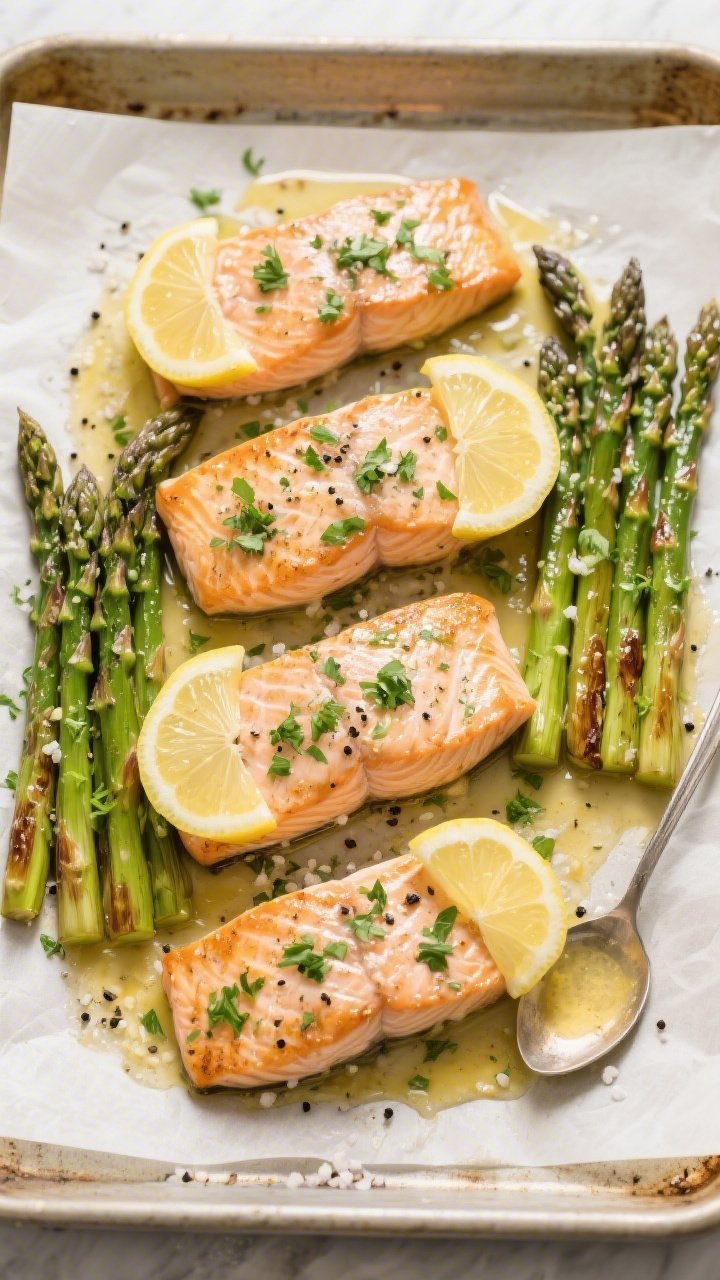
- Preheat the oven: Set to 425°F (220°C). Line a large sheet pan with parchment paper or lightly oil it for easier cleanup.
- Prep the asparagus: Trim woody ends by snapping or cutting the bottom inch.
Pat dry to help them roast instead of steam.
- Toss the asparagus: On the sheet pan, toss asparagus with 1 tablespoon olive oil, 1/2 teaspoon salt, and a pinch of pepper. Spread into a single layer along the edges, leaving room in the center for the salmon.
- Mix the sauce: In a small bowl, combine melted butter, remaining 1 tablespoon olive oil, minced garlic, lemon zest, 2 tablespoons lemon juice, Dijon, and honey. Add red pepper flakes if using.
Whisk until smooth.
- Season the salmon: Pat fillets dry. Place them skin-side down (if using skin-on) in the center of the pan. Sprinkle with the remaining 1/2 teaspoon salt and the rest of the pepper.
- Brush and drizzle: Spoon about half of the lemon garlic mixture over the salmon.
Drizzle a little over the asparagus as well. Reserve the rest for finishing.
- Roast: Bake for 10–12 minutes for thinner fillets, or 12–14 minutes for thicker ones. The asparagus should be crisp-tender and lightly charred on the tips, and the salmon should flake easily with a fork.
- Optional broil: For extra color, switch to broil for 1–2 minutes at the end.
Keep a close eye to avoid overcooking.
- Finish and garnish: Spoon the remaining sauce over the salmon. Sprinkle with chopped parsley and add lemon slices or wedges for serving.
- Serve immediately: Plate salmon with a generous portion of asparagus. Add a final squeeze of fresh lemon for brightness.
Storage Instructions
Loved This Recipe?
If you're looking for more simple, healthy keto dinners, grab my FREE 7-Day Easy Keto Dinner Reset. You'll get 7 easy keto dinner recipes, simple grocery lists, and a done-for-you plan that takes the stress out of mealtime.
- Refrigerate: Cool completely, then store salmon and asparagus in airtight containers for up to 3 days.
- Reheat gently: Warm at 300°F (150°C) for 8–10 minutes, or in a covered skillet over low heat.
Avoid microwaving for too long to prevent drying.
- Enjoy cold: Flake leftover salmon over salads or grain bowls. The asparagus is great chilled or at room temperature.
- Freezing: Not ideal for asparagus. You can freeze cooked salmon for up to 2 months, but texture will be softer after thawing.
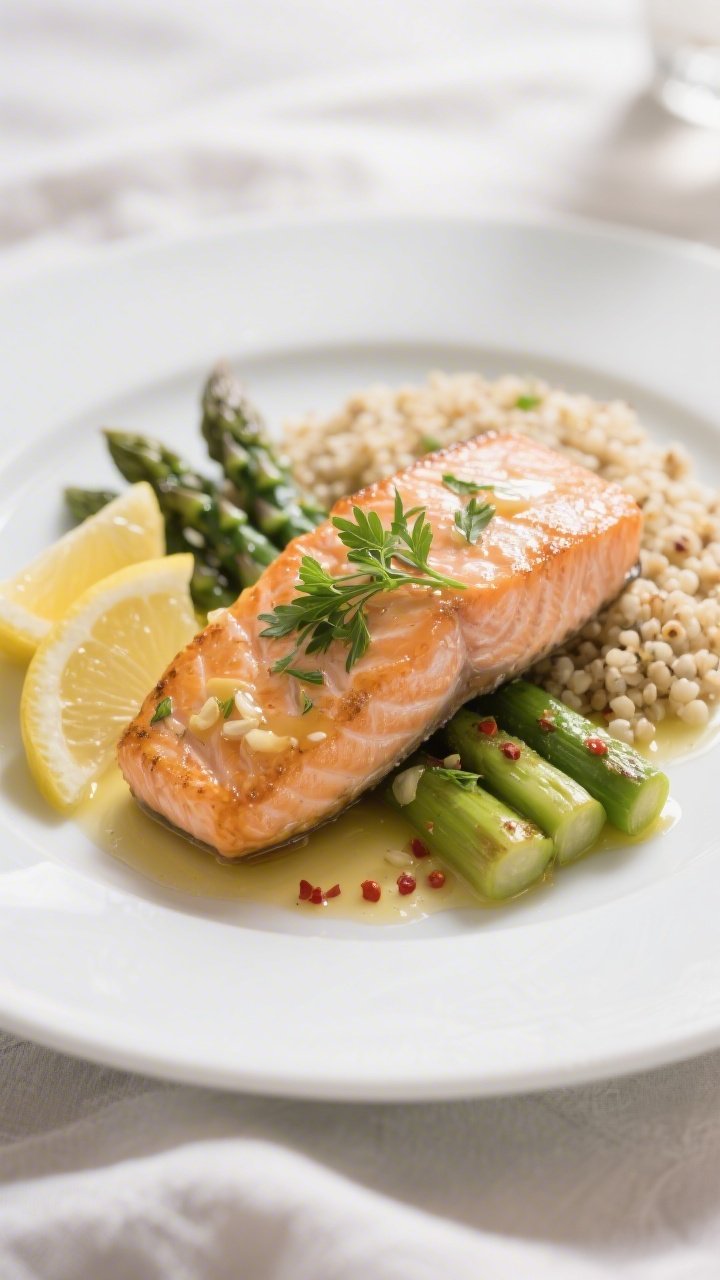
Benefits of This Recipe
- Nutrient-dense: Salmon provides omega-3s and high-quality protein.
Asparagus adds fiber, vitamins A, C, and K, and folate.
- Time-saving: From start to finish, dinner is on the table in about 25–30 minutes.
- Minimal cleanup: One pan and one small bowl. That’s it.
- Kid- and guest-friendly: Clean, bright flavors that aren’t overpowering, with easy tweaks for different tastes.
- Easy to scale: Double the recipe for a crowd by using two sheet pans and rotating them halfway through cooking.
Common Mistakes to Avoid
- Overcrowding the pan: Give the asparagus and salmon space or they’ll steam instead of roast. Use two pans if needed.
- Skipping the pat-dry step: Excess moisture prevents browning and crisp edges.
- Overcooking the salmon: Pull it when the center flakes but is still moist.
Aim for 125–130°F (52–54°C) for medium.
- Using too much lemon juice upfront: Acid can “cook” the salmon if it sits too long. Brush most of the sauce just before roasting and save some for finishing.
- Uneven asparagus thickness: Mix thin and thick spears and they won’t cook evenly. Group by size or adjust cooking time.
Alternatives
- Different fish: Try Arctic char, steelhead trout, or cod.
For cod, add 2–4 extra minutes to the cook time.
- Other vegetables: Broccolini, green beans, or cherry tomatoes roast well. Potatoes need a head start: roast them 15 minutes before adding the salmon.
- Herb swaps: Use dill, chives, basil, or thyme. Fresh herbs brighten the dish; dried herbs should be used sparingly.
- Dairy-free: Skip the butter and use all olive oil.
Add a splash more lemon for richness.
- Spice variations: Add smoked paprika, cumin, or a pinch of cayenne. For a Mediterranean twist, add capers and olives.
- Glaze option: Replace honey and Dijon with 1 tablespoon maple syrup and 1 teaspoon grainy mustard for a sweeter, caramelized finish.
FAQ
Can I use frozen salmon?
Yes. Thaw it overnight in the fridge or under cold running water in its packaging.
Pat very dry before seasoning to ensure proper browning.
How do I know when the salmon is done?
It should flake easily with a fork and be slightly translucent in the center. A thermometer should read about 125–130°F (52–54°C) for medium doneness.
What if my asparagus is very thin?
Add the salmon to the pan first, roast for 3–4 minutes, then add the thin asparagus so it doesn’t overcook. Alternatively, reduce total cook time by a couple of minutes.
Can I make this ahead?
You can prep the sauce and trim the asparagus a day ahead.
For best texture, roast right before serving. Reheated salmon is fine but won’t be as juicy as fresh.
Do I need to remove the salmon skin?
No. Skin-on fillets hold together better and protect the fish from overcooking.
After roasting, the skin will easily separate if you prefer not to eat it.
Is parchment paper necessary?
Not required, but it prevents sticking and speeds up cleanup. If you skip it, lightly oil the pan and don’t try to move the fish until it releases easily.
How can I make it spicier?
Increase red pepper flakes or add a light drizzle of chili oil before serving. A sprinkle of Aleppo pepper gives gentle heat and great flavor.
What sides go well with this?
Try roasted potatoes, couscous, quinoa, or a simple mixed greens salad.
A garlicky yogurt sauce or tzatziki also pairs nicely.
Wrapping Up
One-pan lemon garlic salmon and asparagus brings freshness, speed, and comfort to the table with almost no fuss. The sauce is bright and buttery, the textures are spot-on, and the cleanup is blessedly simple. Whether it’s a weeknight dinner or a casual meal with friends, this recipe delivers every time.
Keep a lemon, a few cloves of garlic, and a fillet or two in the freezer, and you’ve always got a plan for a great meal.
Printable Recipe Card
Want just the essential recipe details without scrolling through the article? Get our printable recipe card with just the ingredients and instructions.